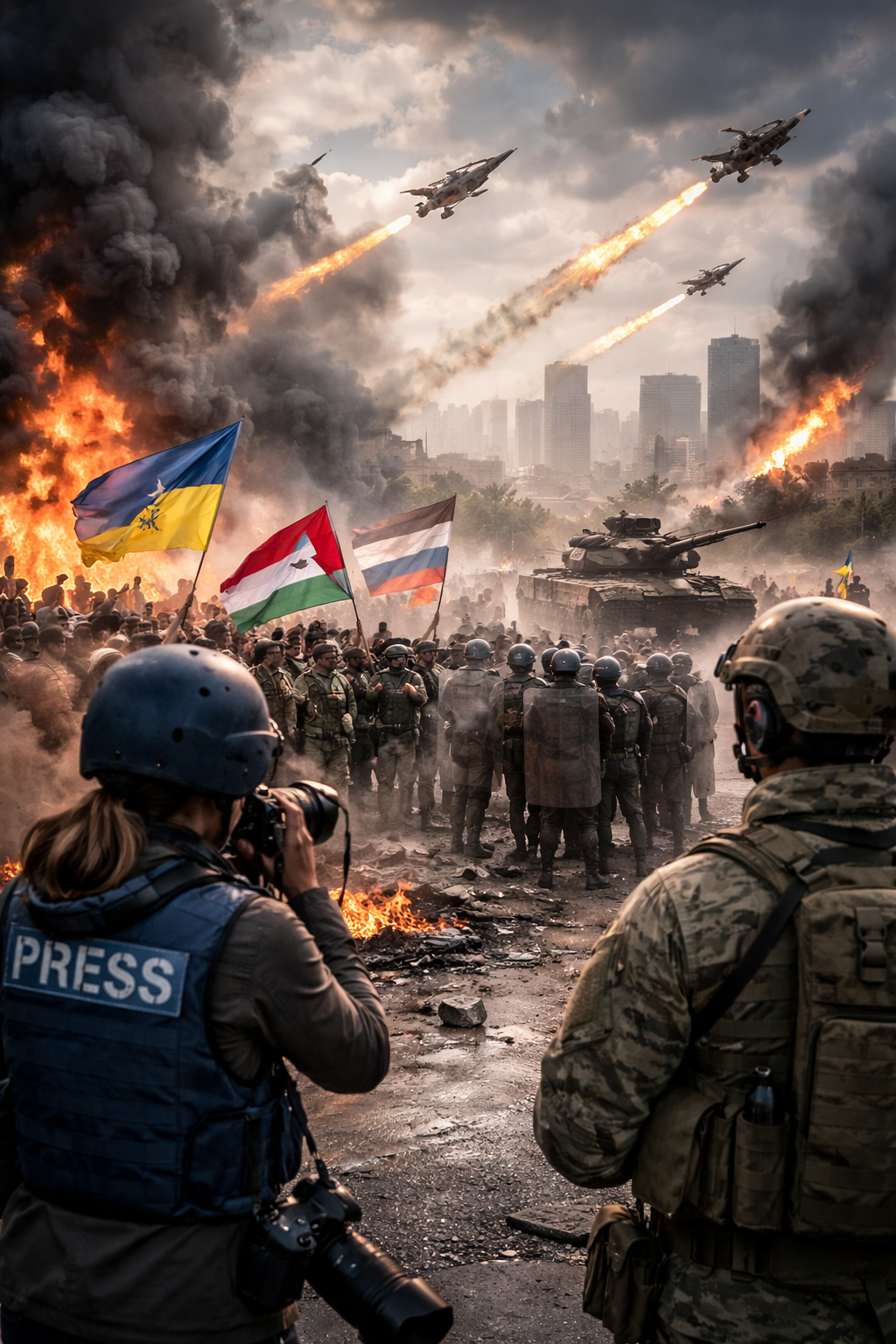
Rising Tensions: Why the World Is Getting More Unstable Right Now
International conflicts are piling up. And diplomacy can barely keep up.
Anyone following the news might think the world has gone off the rails. It's boiling over everywhere. Old conflicts are flaring up again, new ones are emerging. And in the middle of it all: a world order that seems increasingly fragile.
More Than Just Headlines
In the Middle East, the situation remains tense. Despite all peace efforts, some conflicts seem unsolvable. Every attempt at reconciliation is overshadowed by new escalations. The region remains a powder keg.
In Eastern Europe, things have calmed down somewhat, but there's no talk of relaxation. The divides are deep, the mistrust remains. Economic sanctions are having an effect, but political solutions aren't in sight.
The Major Powers and Their Interests
What complicates the situation: the big players are pursuing completely different goals. The U.S. is focused on its interests in the Pacific region. China is systematically expanding its influence. Russia wants to play on the world stage again. Europe is trying not to get crushed between the blocs.
The result? A complex web of dependencies, threats, and negotiations. "New world order" some call it. Others speak of a dangerous power vacuum.
Africa in Focus
What's often overlooked: many future conflicts could emerge in Africa. Resource conflicts, climate change, population growth – the mix is explosive. And while Europe is busy with its own problems, others are already securing influence on the continent.
China is investing massively in infrastructure. Russia is delivering weapons. Europe's old colonial powers are losing relevance. This has consequences – not just for Africa, but for global security architecture.
What This Means for Us
Germany sits right in the middle. As an export nation, we depend on stable trade routes. As a NATO member, we're part of a military alliance. As an EU core state, we're responsible for European foreign policy.
The days when you could stay out of it are over. Neutrality is no longer an option.
At the same time, war fatigue is growing among the population. People want peace, stability, predictability. But the world isn't cooperating. The question is: how long can this tension last?
Walking a Tightrope
Diplomats speak of a "fragile balance." Nobody wants a major war. But small conflicts escalate faster than you'd think. One wrong word, one miscalculation – and suddenly you're at the edge of the abyss.
History teaches us: wars don't happen overnight. They emerge from a series of bad decisions. From communication breakdowns. From the feeling of having no other choice.
The world is balancing on a tightrope. And we all hope that reason prevails.